

Key Takeaways
- Motorcycle tire lifespan varies: Sport tires may last 3,000–6,000 miles, while touring and cruiser tires can last 8,000–15,000 miles or more, depending on riding conditions.
- Know when to replace your tires: Worn tread, cracking, uneven wear, and changes in handling are common signs that motorcycle tires need replacement.
- Check the tire’s age: The last four digits of the DOT date code show the week and year of manufacture. Tires should receive annual professional inspections after five years of use.
- Monitor tread depth and tire pressure: Replace tires when they reach the manufacturer’s wear indicators, and maintain the recommended cold tire pressure to help prevent premature wear.
- Choose compatible replacement tires: Match your motorcycle’s required tire size, load rating, and speed rating, and have new tires properly mounted and balanced.
Motorcycle tires don’t come with a set replacement schedule. Some wear out after a few thousand miles, while others last much longer. Mileage is a useful starting point, but tread wear, tire age, and overall condition can tell you much more about when it’s time for new rubber.
Knowing when to change motorcycle tires can help you catch problems before they affect your ride. Here’s how to spot the warning signs, check your tires for wear, and decide when a replacement is due.
How Long Do Motorcycle Tires Actually Last?
Motorcycle tire lifespan varies considerably. Tire compound, bike weight, maintenance, and road conditions all influence how quickly the rubber wears.
Average Mileage Expectations: Front vs. Rear Tires
Rear tires typically wear faster because they handle acceleration and much of the motorcycle’s weight. Front tires often last longer, although braking and cornering still take their toll.
Here are general mileage ranges to help with planning:
| Tire Type | Approximate Lifespan |
| Sport/performance | 3,000-6,000 miles |
| Sport-touring | 5,000-10,000 miles |
| Touring/cruiser | 8,000-15,000+ miles |
Keep in mind that these are basic estimates, not exact replacement schedules. Some tires fall well outside these ranges, and front and rear tires may need replacement at different times.
How Your Riding Style and Bike Type Affect Tire Wear
A powerful sport bike can wear through soft rear rubber relatively quickly, especially with hard acceleration and frequent cornering. Touring tires generally use compounds designed for longer service life.
Cruiser weight, passenger loads, and heavy luggage can also increase wear. Colorado’s winding mountain roads add another variable, particularly for riders who enjoy spirited cornering.
Correct tire pressure makes a difference, too. Check it regularly when the tires are cold, using the motorcycle manufacturer’s specifications.
4 Critical Signs It’s Time to Replace Your Motorcycle Tires
1. Low Tread Depth and the Tread Wear Indicator (TWI)
Tread grooves help move water away from the contact patch. As they wear down, wet-road traction decreases.
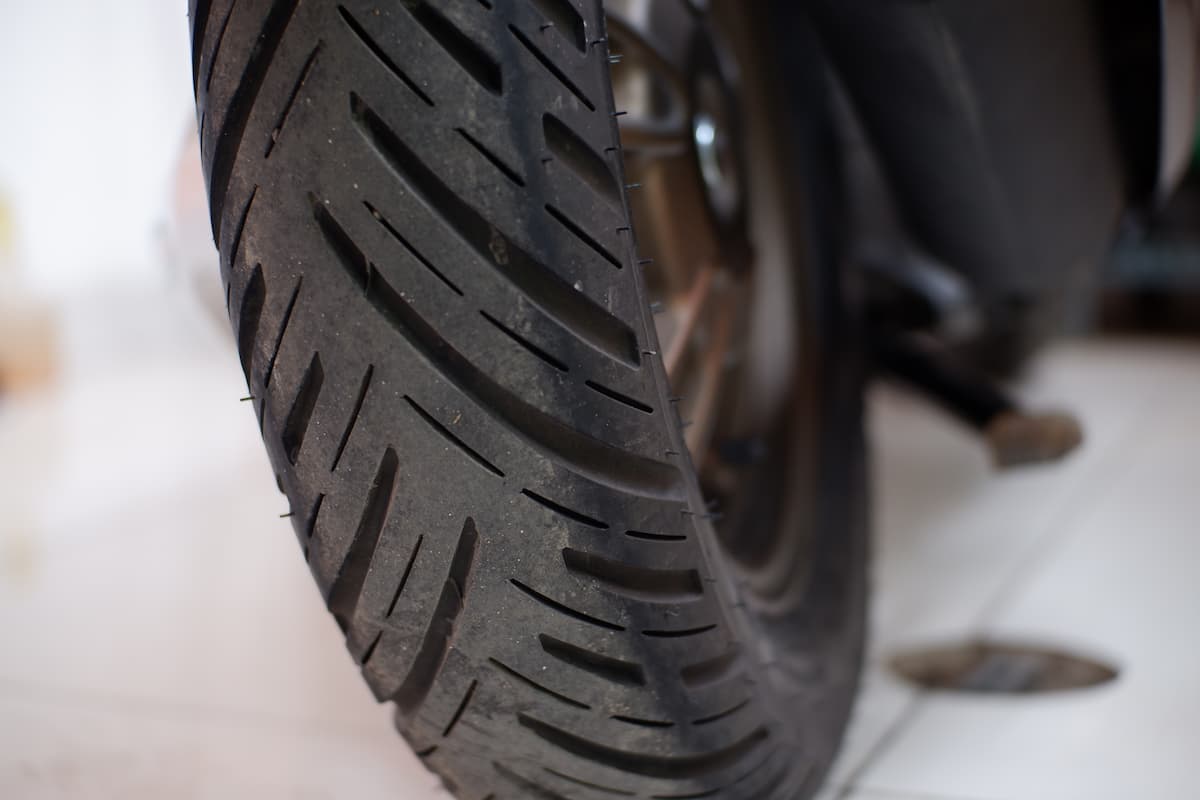
Most motorcycle tires have built-in tread wear indicators, often marked by small symbols on the sidewall. When the tread surface reaches an indicator, it’s time for replacement.
Use a tread-depth gauge to check several points across each tire. Replace tires before they reach their manufacturer’s wear limit, and follow applicable state requirements.
2. Dry Rot, Cracking, and Weather Checking
Rubber deteriorates with age and exposure, even when the motorcycle isn’t ridden frequently.
Check the sidewalls and grooves for:
- Fine cracks or splitting
- Bulges or unusual deformation
- Deep cuts or exposed tire cords
- Damage around the bead or shoulder
Colorado’s strong sunlight and seasonal temperature changes make regular inspection especially worthwhile. Have questionable tires evaluated before riding.
3. Uneven Wear Patterns: Squaring Off and Cupping
A tire may have plenty of tread in one area but be badly worn elsewhere.
Squaring off happens when the center wears flatter than the shoulders, often after extended highway riding. Cupping appears as uneven dips or scalloped patches along the tread.
These patterns can affect steering feel and may point to incorrect inflation, suspension problems, or other mechanical issues. A technician can identify the cause before new tires are installed.
4. Unpredictable Handling, Vibrations, and Loss of Grip
A motorcycle that suddenly feels different deserves attention.
Warning signs include:
- New handlebar or seat vibrations
- Unusual steering resistance or wobbling
- Reduced traction in familiar conditions
- Pulling or instability during turns
Tires aren’t always responsible. Wheel balance, bearings, and suspension can produce similar symptoms. Have the motorcycle inspected rather than assuming the issue will disappear.
The Age Rule: Do Motorcycle Tires Expire?
Yes. Motorcycle tires age even when they have plenty of tread. Time, heat, sunlight, and storage conditions gradually affect rubber and internal materials.
How to Read the DOT Date Code on Your Motorcycle Tire
The DOT code on a tire’s sidewall identifies its manufacturing information. The final four digits of the full code show the production week and year.
For example, 2423 means the tire was manufactured during the 24th week of 2023.
The complete date code may appear on only one sidewall, so check the opposite side if you don’t see four digits at the end.
The “5-Year Rule”: Why Old Rubber Is Dangerous Even With Good Tread
Five years isn’t an automatic expiration date. Annual professional inspections are recommended once a tire has been in use for five years and replacement by ten years after manufacture.
Poor storage or visible deterioration can require earlier replacement. The motorcycle or tire manufacturer’s guidance should always take priority, even if the bike isn’t used heavily.
Ready for New Rubber? Trust Fay Myers Motorcycle World
The right replacement tires depend on your motorcycle and how you use it. Fay Myers Motorcycle World can help Colorado riders choose suitable options and get them installed correctly.
Find the Perfect Fit at the Fay Myers Parts Department
Our Parts Department can help you compare motorcycle tires based on your bike’s specifications and riding habits.
We’ll help you consider tire size, load rating, speed rating, and tread design so your new rubber suits the job. If you’re preparing for longer rides or upgrading to a different tire style, our team can explain the available options.
Expert Mounting and Balancing at the Fay Myers Service Department
Proper installation matters as much as tire selection. The Fay Myers Service Department can handle tire mounting and balancing, inspect the wheels, and check for issues contributing to uneven wear.
Our technicians can also inspect related components if your motorcycle has developed unusual vibrations or handling problems.
If you think it might be time to replace your tires or get your bike inspected, we’re here to help. Contact us to schedule professional motorcycle tire installation with our Service Department today.
Frequently Asked Questions (FAQ)
Do I Need to Replace Both Motorcycle Tires at the Same Time?
No. Front and rear motorcycle tires often wear at different rates. Replace whichever tire needs attention, provided the remaining tire is in good condition and the tire combination meets manufacturer recommendations.
What Is the Minimum Safe Tread Depth for Motorcycle Tires?
Replace tires at their manufacturer’s wear indicators and before reaching applicable legal limits. Dunlop uses 2/32 inch (1.6 mm) wear bars on many tires, although thresholds vary by manufacturer and tire design. Earlier replacement improves your margin for wet-weather traction.
Is It Safe to Patch or Plug a Punctured Motorcycle Tire?
Some small tread-area punctures may qualify for professional repair, depending on the tire manufacturer’s rules. Sidewall damage generally requires replacement. Avoid relying on an external plug as a permanent repair, and have a qualified technician inspect the tire internally.
Image Source: Sahel Fahmi/Shutterstock


