It only takes one loose strap or weak anchor point to damage a motorcycle during transport. That’s why taking the time to secure your bike matters just as much as loading it properly in the first place. From wheel chocks and ratchet straps to suspension tension and rear stabilization, this guide breaks down the safest way to haul a motorcycle step by step.
The Basics of How to Transport a Motorcycle Safely
When you’re hauling a motorcycle, the goal is simple: keep the bike upright, stable, and unable to move independently from the trailer. That means the front wheel needs to stay planted, the bike should remain centered, and the tie-downs must hold tension throughout the drive.
Most motorcycles are transported using an open trailer, enclosed trailer, or pickup truck with a loading ramp and anchor points. No matter the setup, the same principles apply. Strong attachment points, quality straps, and proper suspension compression matter far more than simply cranking everything down as tight as possible.
Before loading the motorcycle:
- Inspect your trailer tires and lights
- Confirm the ramp is secure and weight-rated
- Remove loose luggage or accessories
- Position the motorcycle in gear once loaded
Taking a few extra minutes during setup can prevent expensive damage later.
Essential Gear: Straps, Chocks, and Anchors
Using the right hauling equipment makes the process safer and significantly easier.
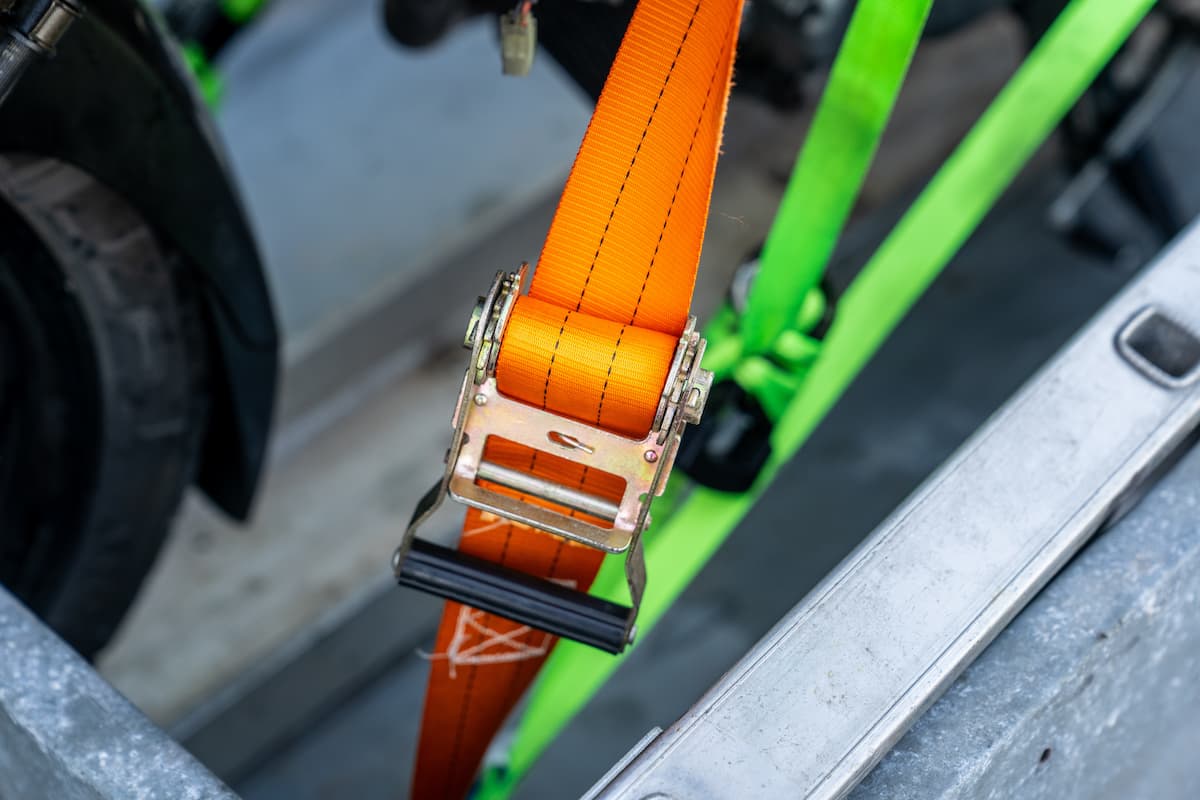
Ratchet Straps or Cam Buckle Straps
Most riders prefer ratchet straps because they hold tension more securely during long drives. Look for straps with durable hooks, strong load ratings, and weather-resistant webbing.
Cam buckle straps can work for lighter motorcycles, but ratchet straps are generally better for heavier bikes or highway transport.
Soft Loops
Soft loops wrap around secure areas of the motorcycle and prevent metal hooks from scratching painted or coated surfaces. They also help create stronger, more stable attachment points around the triple clamp or handlebars.
Wheel Chocks
A wheel chock helps stabilize the front tire and keeps the bike upright during loading. This becomes especially helpful if you’re loading the motorcycle alone. Many riders consider wheel chocks optional until they actually use one.
Anchor Points
Anchor points must be securely mounted to the trailer or truck bed. Weak anchors can fail quickly under highway stress.
Always inspect:
- D-rings
- E-track systems
- Trailer flooring
- Mounting hardware
Never assume factory-installed anchors are strong enough without checking their load rating.
Step-by-Step: How to Tie Down a Motorcycle on a Trailer
Learning how to tie down a motorcycle on a trailer properly is mostly about balance and consistency. Once you understand the process, it becomes much easier to repeat confidently.
Step 1: Position the Motorcycle
Roll the motorcycle into the center of the trailer and place the front wheel firmly into the wheel chock.
If you do not have a chock, position the front tire against the trailer rail or front wall while keeping the bike upright.
Step 2: Attach Soft Loops
Wrap soft loops around solid mounting points:
- Lower triple clamp (preferred)
- Or sturdy handlebars when appropriate
Avoid attaching straps to:
- Plastic fairings
- Mirrors
- Brake lines
- Weak accessory bars
Step 3: Secure the Front Straps
Attach ratchet straps from the motorcycle down to trailer anchors at roughly 45-degree angles. Tighten both sides evenly while keeping the bike centered. The front suspension should compress slightly as tension increases.
Step 4: Stabilize the Rear
Rear straps prevent side-to-side movement during turns and rough roads.
Attach rear tie-downs to:
- Passenger peg brackets
- Rear frame sections
- Crash bars
Rear straps generally require less tension than the front.
Step 5: Perform a Shake Test
Once secured, gently shake the motorcycle. The bike and trailer should move together as one unit with minimal shifting.
Step 6: Recheck Everything After Driving
Straps often settle during the first few miles. Stop after 10-15 minutes to check:
- Strap tension
- Hook placement
- Suspension compression
- Tire position
This quick inspection is one of the most overlooked parts of motorcycle transport.
Compressing the Suspension: How Much Tension is Too Much?
One of the most common hauling mistakes is overtightening the front suspension. Too little compression allows the motorcycle to bounce and shift. Too much compression can stress fork seals, suspension components, and handlebars.
A good target is roughly 25–35% front suspension compression. The bike should feel stable without appearing fully compressed downward.
Modern motorcycle suspension is designed to move. Leaving some travel available actually helps absorb road vibration during transport instead of transferring every bump into the straps.
If the straps feel excessively tight, back them off slightly and reassess stability.
Securing the Rear: Preventing Lateral Slide
Front straps do most of the heavy lifting, but rear stabilization is what keeps the bike from shifting sideways during turns or uneven road surfaces.
Without rear tie-downs:
- The rear tire can slide laterally
- Front straps may loosen unevenly
- The motorcycle can lean during transport
Rear straps should pull slightly outward and backward to naturally stabilize the motorcycle.
Some riders skip rear straps on short trips, but they add a noticeable amount of security during highway driving or longer hauls.
Common Mistakes to Avoid When Transporting Your Bike
Most transport problems come from small setup mistakes rather than catastrophic failures.
Common issues include:
- Using cheap or worn-out straps
- Overtightening the suspension
- Attaching straps to weak handlebars
- Forgetting rear stabilization straps
- Leaving the bike in neutral
- Skipping strap checks after loading
- Allowing straps to rub against sharp edges
- Using weak anchor points
FAQs
What is the safest way to transport a motorcycle?
The safest method is using a properly rated trailer with quality tie-down straps, secure anchor points, and a wheel chock. The motorcycle should remain upright with moderate suspension compression throughout the drive.
Should you transport a motorcycle in gear?
Yes. Leaving the bike in first gear helps prevent rolling and adds another layer of stability during transport.
How tight should motorcycle tie-down straps be?
Straps should feel snug enough to stabilize the motorcycle without fully compressing the suspension. Overtightening can damage suspension components over time.
Can you transport a motorcycle without a wheel chock?
Yes, but wheel chocks make loading and securing the bike much easier—especially when working alone.
Is it safe to strap a motorcycle by the handlebars?
Sometimes, but the lower triple clamp is usually more secure. Certain handlebars are not designed to handle heavy tie-down pressure.
How often should tie-down straps be checked?
Inspect them after the first 10–15 minutes of driving and periodically during long trips to ensure nothing has loosened.
Upgrade Your Haul: Shop Professional Tie-Down Gear at Fay Myers
Safe motorcycle transport starts with the right equipment. At Fay Myers Motorcycle World, we carry quality tie-down straps, wheel chocks, anchors, and hauling accessories designed to protect your bike during transport.
Not sure which setup works best for your motorcycle or trailer? Our team can help you choose the right gear for your hauling needs. And if you’d rather leave the prep work to professionals, our service department can help inspect your bike before transport or riding season.
Visit Fay Myers in Greenwood Village or browse our parts and accessories selection online to get your hauling setup dialed in before your next trip.
Image Source: fotopanorama360 / Shutterstock